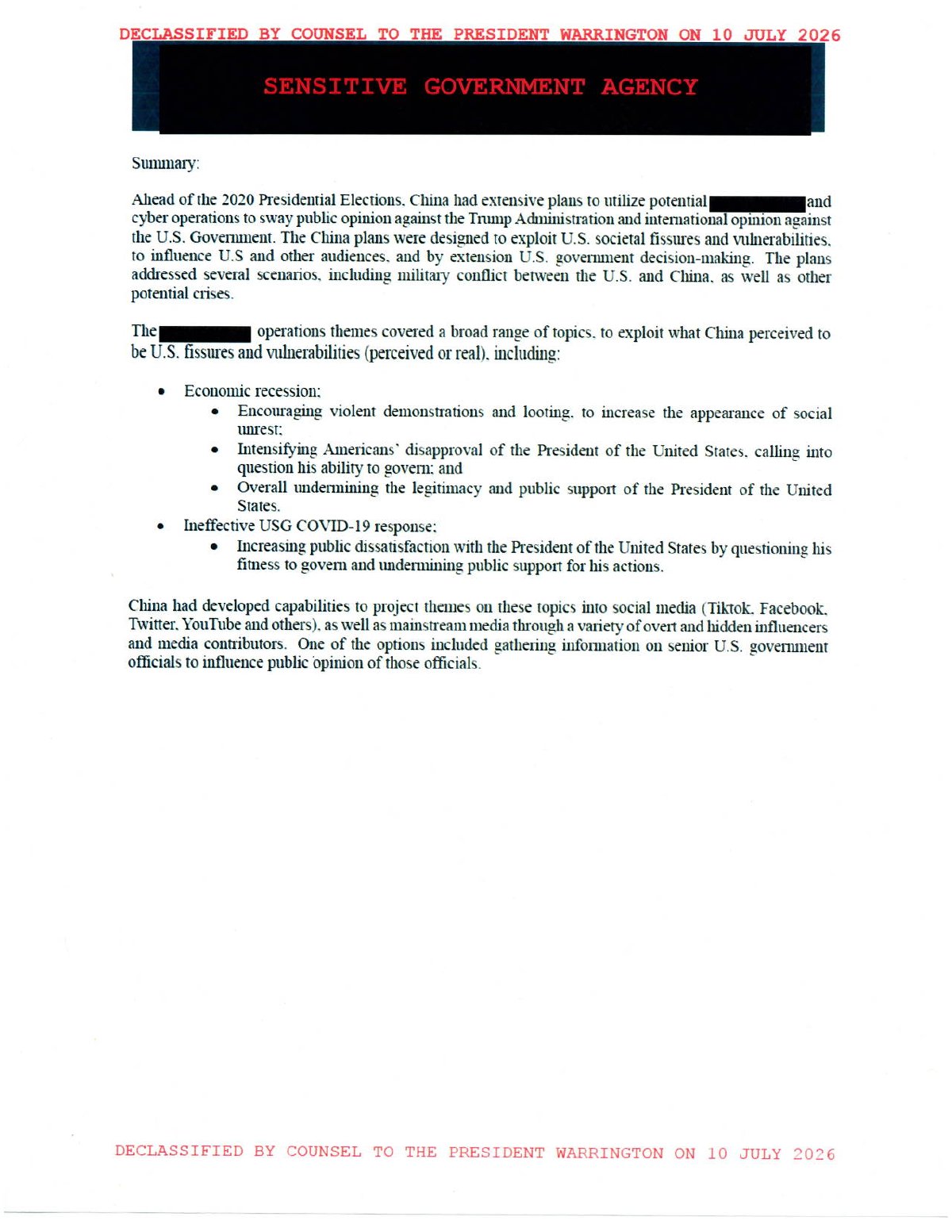
States ahead of the 2020 Presidential Elections, China had extensive plans to use [OCR unclear: potential] and cyber operations to sway public opinion against the Trump Administration and international opinion against the U.S. Government, designed to exploit U.S. societal fissures and vulnerabilities and, by extension, U.S. government decision-making; plans addressed several scenarios including U.S.-China military conflict (p.1).
p.1Summary (Part 1) — China's 2020 Election Influence Plans (Economic/COVID Themes)
Summary/overview document. Declassified by Counsel to the President Warrington 10 July 2026Jul 10, 20261 pageSummary - clean - declass marked PART 1.pdf
Declassified by Counsel to the President Warrington 10 July 2026
Key Insights
AI-generated from the sourced claims — verify against the documents.
China had extensive plans to use cyber operations to sway public opinion against the Trump Administration and exploit U.S. societal fissures and vulnerabilities, including scenarios of U.S.-China military conflict.
Operations themes included encouraging violent demonstrations and looting to increase the appearance of social unrest, and intensifying disapproval of the President while questioning his ability to govern.
China had developed capabilities to project these themes into social media (TikTok, Facebook, Twitter, YouTube) and mainstream media through overt and hidden influencers and media contributors.
One option included gathering information on senior U.S. government officials to influence public opinion of them.
3 sourced claims
Operations themes in this part: economic recession; encouraging violent demonstrations and looting to increase the appearance of social unrest; intensifying disapproval of the President and questioning his ability to govern; undermining the legitimacy and public support of the President; and portraying an ineffective USG COVID-19 response (p.1).
p.1States China had developed capabilities to project these themes into social media (TikTok, Facebook, Twitter, YouTube and others) and mainstream media through overt and hidden influencers and media contributors; one option included gathering information on senior U.S. government officials to influence public opinion of them (p.1).
p.1Page evidence
Summary (Part 1) — China's 2020 Election Influence Plans (Economic/COVID Themes) · p.1
Page OCR text
DECLASSIFIED BY COUNSEL TO THE PRESIDENT WARRINGTON ON 10 JULY 2026

Summary:

Ahead of the 2020 Presidential Elections. China had extensive plans to utilize potential and
cyber operations to sway public opinion against the Trump Administration and international opmion against
the U.S. Government. The China plans were designed to exploit U.S. societal fissures and vulnerabilities.
to influence U.S and other audiences. and by extension U.S. government decision-making. The plans
addressed several scenarios, including military conflict between the U.S. and China. as well as other
potential crises.

The J Operations themes covered a broad range of topics. to exploit what China perceived to
be U.S. fissures and vulnerabilities (perceived or real). including:

e Economic recession:
e Encouraging violent demonstrations and looting. to increase the appearance of social
unrest:
e Intensifying Americans’ disapproval of the President of the United States. calling into
question his ability to govern: and
e Overall undermining the legitimacy and public support of the President of the United
States.
e Ineffective USG COVID-19 response:
e Increasing public dissatisfaction with the President of the United States by questioning his
fimess to govern and undermining public support for his actions.

China had developed capabilities to project themes on these topics into social media (Tiktok. Facebook.
Twitter, YouTube and others), as well as mainstream media through a variety of overt and hidden influencers
and media contributors. One of the options included gathering information on senior U.S. government
officials to influence public opinion of those officials.

DECLASSIFIED BY COUNSEL TO THE PRESIDENT WARRINGTON ON 10 JULY 202

6
Page 1 of 1